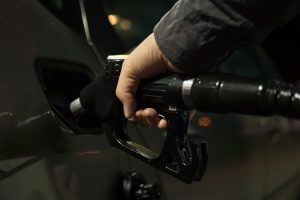
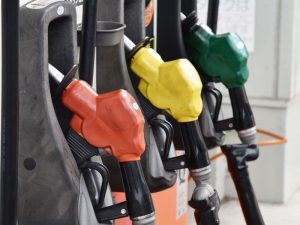
Gasoline evaporates. You’ve probably noticed this when you accidentally spill a bit on the pavement during a fill up. Gasoline evaporates at faster or slower depending on the temperature. It’s called volatility, and unbelievably, volatility directly influences the volatile price of gasoline.
Summer Heat. In the hot months of summer, gasoline evaporates faster than when its cool. Since that’s not good for the environment, regulatory bodies require that gasoline sold during the summer have a lower Reid vapor pressure. In other words, summer gas must be less volatile, and evaporate more slowly at higher temperatures.
Winter Starts. When the weather is cooler, gasoline is produced that will ignite more easily in the lower temps. This gasoline has more butane, and as a result has a higher RVP. This gasoline is cheaper.
Federal law says that refiners must switch to summer blends by June 1, and can switch back to winter blends on September 16. You can see these switches reflected at the pump!
A child with a new driver’s license brings excitement, worry, convenience, and extra expense to a family. Some children get a brand new car when they turn 16, some inherit or buy a used vehicle, and some have to share a vehicle with other family members. Whichever vehicle your child gets, there are some maintenance skills to teach them.
Pump the Gasoline. Many parents teach their young teens to fill up the family van, but we’re always surprised at how many new drivers don’t have this skill. Finding the gas door release, entering credit/debit card information, knowing which grade gasoline to use, and knowing what to do if the gas nozzle doesn’t turn off – none of these are instinctive.
Put Air in the Tires. Every vehicle has a certain optimal tire pressure. Teach your child how to find this information, and then how to use an air pump at the gas station.
Check Those Fluids. While this isn’t necessary for day to day driving, it’s still important for every driver to know how to check – and fill – wiper fluid, oil, and coolant.
We hate to bring it up, but when teens get their license, it won’t be long before they leave the nest. Before you give that first set of keys, make sure your child knows the very basics of car care. As time goes by, teach them more and more ways to take care of the vehicle.
PS Here’s a list of things that you should make sure every vehicle has.
Most people own more than one vehicle. Often, a family will have a van or SUV, a sedan, a truck, and maybe even an old beater car. These vehicles all look different from the outside, but if they are gasoline powered, they all have the same kind of engine – a four stroke engine. This engine turns the wheels to make the vehicles go. It’s actually a pretty simple process.
First, the three main pieces that operate the engine:
Piston – a rod that goes up and down. Most vehicles have either 4, 6, or 8 pistons. Connecting Rod – a rod that connects each piston to the crankshaft. Crankshaft – a rotating shaft that turns the up and down motion of the pistons to the rotating motion needed to turn the wheels on a vehicle.
Stroke 1 – Intake. As the piston goes down, an air/fuel mixture is brought into the engine. Stroke 2 – Compression. The piston moves back up, compressing the air/fuel mixture. Stroke 3 -Ignition. As the piston begins to move back down, the compressed a spark plug ignites the air/fuel mixture. Stroke 4 -Exhaust. Once again, the piston begins to move up, pushing out the exhaust created from the ignition phase.
Take a look at it in action:
Next time you start your engine and back out of the drive, you’ll have a little background knowledge on how your engine works. The basic process is simple, but there is a lot more involved. That’s why we at Norris Automotive are here, to keep your engine working – from the pistons and crankshaft to the brakes and the battery.
At Norris, we want to make sure your vehicle is in tip top condition – all the time. We know that sometimes, you’ll hear a noise, or spot a leak, or feel a hesitation in your engine…and you mean to call, but life gets in the way.
That’s why we text you from time to time, just to check on you. That way, if you have an issue, you can quickly text us back, “Yeah, there’s this funny noise when I turn…”
It’s easy to make an appointment right then and there. And yes, we’ll text you a reminder.
To make things even more simple, we also have drop off service!
It’s hot. Gas prices are skyrocketing. Running your air conditioner means you use more gasoline. It’s a recipe for paying even more at the pump. Here are some hints on keeping your vehicle’s air conditioner running more efficiently, saving you money at the pump and helping your AC system last longer.
Don’t run your air conditioner while your car is idling. That means that you shouldn’t run outside and pre-cool the car before a trip. Instead, roll down the windows, then run the fan for a few seconds. Warning – it will feel like the heater is on! Once your car no longer feels like an oven, start the air conditioner.
Make sure you have proper Freon levels. If you don’t have enough, the compressor has to work extra hard. If your levels are low, you may have a leak.
Don’t be tempted to ditch the AC and roll the windows down – at least not all the time. In general, rolling your windows down at lower speeds is the only time you are going to save money. Your vehicle is designed to be aerodynamic with the windows up. At higher speeds, the extra drag of the open window will actually reduce your MPG.*
Change the air filter in your car. Less particles in the air means that your engine runs better.
Keep your car’s interior clean. All the dirt from soccer cleats and the crumbs from your last fast food visit get thrown up into the air, and sucked into the air.
In this weather, your air conditioner is a necessity, no matter the price of gasoline. Keep a bit more cool cash in your wallet by following the tips above. And if you run into issues, come see us. We’re cool with keeping your vehicle safe, efficient, and…cool.
When you buy unleaded gas, you’re usually presented with three options – Regular, Midgrade, and Premium. Each of these ‘grades’ has two numbers prominently displayed. The first is the price…and that’s all we’re going to say about that, because you already know.
The other number is called the octane number – also known as the octane rating. Usually, the lowest is 87, then 89 or 90, and finally, somewhere between 91 and 94. But what do those numbers mean? Here are some lessons.
The Small Engine Lesson. You may remember that most cars have a four stroke gasoline engine. One of those four strokes is the compression stroke, during which a piston compresses air and gas before the spark plug ignites it.
It’s important to know that the compression from that piston can cause the air and gas to ignite – before the spark plug fires. This spontaneous combustion is called knocking, and it’s not good for your engine.
The Chemistry Lesson. Crude oil straight from the ground is made up of all different kinds of hydrocarbons, each with a different number of carbon atoms chained together. For example, methane has one carbon atom, butane has four. We’re interested in the two that have a chain of seven (heptane) and eight (octane) carbon atoms.
It doesn’t take a lot of pressure to make heptane explode, whereas octane can handle a lot of pressure.
The Numbers Lesson. This is where the numbers come in. 87 percent gasoline has 87% octane and 13% hectane. 93 percent has 93% octane and only 7% hectane. The higher octane fuel can stand more pressure before it knocks. Engines are designed for fuel not to combust spontaneously. Rather, fuel should burn through controlled combustion, and each engine is designed with a minimum octane rating. Higher performance and luxury vehicles often need a higher octane gasoline.
Am I going to need this lesson in real life? Yes. If your car needs a higher octane gas to operate correctly, you’ll have a notice inside your car’s manual, and inside the fuel door. This will tell the actual minimum number that you need to choose. Some cars require premium gas, and others only recommend it. If you only have a recommendation, you can usually use regular gas, but you may see a decrease in performance and gas mileage.
So here’s your homework. Find out what grade of gasoline your vehicle needs. Check out the owner’s manual – or ask one of the mechanics at Norris Automotive. Whether you need 87% or 94%, we can promise you that you’ll get a 100% accurate answer when you ask us. And – asking us is the smart thing to do!
When you push the brake pedal on your vehicle, it stops. That’s all most drivers know about the braking system in your car. But just how do the brakes work? The short answer is, your brake pads squeeze your wheels and make them stop, just like the brakes on your banana bike.
Your brake pads are the most important component in your braking system. Worn or damaged brake pads can cause major damage to other parts, leading to very expensive repairs. Here’s breakdown on how to keep them in tip top stopping condition.
Inspect them every 5 months or 5000 miles. Make sure you haven’t driven in an hour so that you’ll know your brakes are cool. Look through the holes in your wheel (you might need a flashlight), and note the thickness of the brake pad. If they look like they are less than 1/4″, you probably need to have them replaced. Some brake pads have a helpful indicator slot down the middle of the brake pad. When it gets hard to see, it’s time for those pads to be replaced.
Use Your Senses. You need to check your braking system if any of the following happen when your brake:
You hear a grinding or squealing noise.
The steering wheel or brake pedal shakes. (NOTE: If you slam on brakes, the vibrations you feel are a normal part of the ABS system working.
Your brake light comes on.
If this breakdown has made you feel a bit like having a meltdown, don’t worry! At Norris Automotive, we see a lot of brakes, and we’ll inspect your brakes for free. Brake when you see our sign, and drop by!
Every car with an air conditioner has an option that has a car with a u-turn arrow on it – the recirculate button. Most of us have no idea what that button does, much less when it should be used. Circle up, and let’s talk about it.
What Does it Do? When a car air conditioner is on, it draws air from your car’s exterior into the system, cools it, and blows it into the car cabin.
The recirculate button changes that. Instead of pulling air from outside, the air inside the vehicle is repeatedly drawn back into the AC, cooled, and blown into your vehicle.
There are several benefits to using the recirculate button. First, it will actually keep your car cooler. It can also reduce the amount of odors, car fumes, pollen, and other pollution in your car’s interior.
When Should You Use It? Usually the recirculate button should be used anytime your air conditioner is on. It’s especially helpful, though, during very hot weather or when you are in slow moving traffic jams.
When Should You Turn it Off? Using the recirculate button will increase the humidity inside your car. If you’re one of those who like the AC on even during cold weather, you’ll notice that your windows will fog up if you have the recirculate button on. In some vehicles, the air in the back seats will feel stuffy to any passengers.
In these times with high gas prices and high temperatures, the recirculate button can turn on a cooler car and higher gas mileage.
Even if your dad isn’t mechanically inclined, there are some things that every guy (and gal!) needs to have in their car care toolkit. Here are six things that will make any dad smile.
Car Battery Charger
Car Battery Charger. This is an amazingly useful device that will make Dad into a superhero. He can charge his dead battery safely, along with anyone else who needs a jump, although he won’t have to jump them! (Read why we don’t recommend you use jumper cables on your vehicle!) You can get a plain vanilla variety, or spice it up with one that has emergency lights, AC outlets, phone chargers, and coffee maker. Okay, we’re kidding about the coffee maker.
Car Ramps. If you’ve heard your mom praying while your dad jacks up the car and crawls underneath, she’ll thank you for getting a set of car ramps. Line them up in front of a vehicle’s tires, and slowly drive up. You’ll have to get mom to buy wheel chocks, which keep the car from rolling backwards.
Socket set. A basic socket set is a must have for any dad. Look for a high quality set with a high number of teeth, quick release buttons, and a sturdy case. Or you could just head into any auto shop and ask for recommendations.
Screwdriver Set. Your dad may already have a motley set of mismatched screwdrivers. Help him get organized and make sure he has the right screwdriver for every job. A good set will have both flat head and Philipps head. We like rubber handles to ensure a good grip, with a chrome/steel finish for the shank. (That’s the metal part.)
Oil Filter Adapter
Oil Filter Adapter. If your dad changes his own oil, you’ve probably heard him speak French while trying to remove an oil filter. Vehicle engineers are notorious for putting them in really hard to reach locations. An oil filter socket will help! It’s a huge socket that goes around the top of the oil filter, and it’s used with a ratchet to make things a lot easier. It may even clean up your dad’s language.
Dog Bone Wrench. What IS a dog bone wrench, you ask? it’s a clever tool that does everything an adjustable wrench does, without the adjusting. It’s like a complete socket set in one tool. They’re great for oil drain plugs, nut holders, damaged bolts, and much more. Fetch this for your dad!
We know that for some reason, dads are more difficult to buy for than moms, so we hope this handy guide helps you pick the perfect gift for your dad. You get bonus points if you learn to use the tools, so you can work on the car side by side with your dad!
Back in the day, people jump started each other’s cars all the time. One vehicle’s battery would go dead, and someone would call their next door neighbor to bring their car over. They’d pull out a set of jumper cables, attach the positive to the positive, the negative to the negative, and soon the dead battery would have enough charge for the car to start and be driven.
Here’s a tip: Jumper cables are no longer a good idea. Modern vehicles contain many complex electronic systems and computers which can be easily damaged if there is a current or voltage spike, or if the sequence of attachment is wrong. A jump gone wrong could turn into an expensive repair. There is also the potential to the battery itself. To make it worse, the damage could be to either vehicle involved in the jumpstart.
We recommend that you invest in a portable car power bank jump starter. These are relatively inexpensive, small units that easily fit in your trunk or hatch area. If you – or your neighbor – have a dead battery, these handy devices will start them without the danger that jumpstarting from a car poses. The power banks usually come with other handy features, like floodlights, USB chargers, cigarette lighter ports, and other emergency features.
And when you get your car started, bring it into us, to find out why the battery went dead to start with. We’ll check your cables, your fluids, the battery itself, and make recommendations to keep you from facing another dead battery any time soon.
This website uses cookies to improve your experience. We'll assume you're ok with this, but you can opt-out if you wish. Cookie settingsACCEPT
Privacy & Cookies Policy
Privacy Overview
This website uses cookies to improve your experience while you navigate through the website. Out of these cookies, the cookies that are categorized as necessary are stored on your browser as they are essential for the working of basic functionalities of the website. We also use third-party cookies that help us analyze and understand how you use this website. These cookies will be stored in your browser only with your consent. You also have the option to opt-out of these cookies. But opting out of some of these cookies may have an effect on your browsing experience.
Necessary cookies are absolutely essential for the website to function properly. This category only includes cookies that ensures basic functionalities and security features of the website. These cookies do not store any personal information.
Any cookies that may not be particularly necessary for the website to function and is used specifically to collect user personal data via analytics, ads, other embedded contents are termed as non-necessary cookies. It is mandatory to procure user consent prior to running these cookies on your website.