Why Choosing an Independent Mechanic (Like Us!) is Best

service auto

When it comes to maintaining and repairing your vehicle, you have several options. You can take it to the dealership, a chain franchise, or an independent mechanic like Norris Automotive. While the dealership and chain franchises may seem like the safer and more reliable choice, most of our customers can attest that there are definitely benefits to choosing a locally owned mechanic like us.

Getting to Know You. One of the most significant benefits of choosing a locally owned independent mechanic is the personalized service we provide. We build relationships with our customers, getting to know you and your vehicle. For our longtime clientele, we probably can tell you about many of the vehicles you’ve had in the past! We take the time to get to know you and your car’s needs. This personalized service can lead to a better outcome for your vehicle.

Saving you Money. Another benefit of choosing mechanic like us is the potential for cost savings. Dealerships and chain franchises often have higher overhead costs, which are reflected in their prices. Independent mechanics, on the other hand, have lower overhead and can offer more competitive prices. Additionally, independent mechanics are more likely to suggest repairs that are necessary, rather than upselling unnecessary services to make a profit.

Discovered this place two years ago, I had spent the previous three years trying different shops and mechanics since moving to the area but there was no discernible difference. Happy I found this place. They have worked on my truck and my BMW several times over the past couple of years and have always been informative, educational, and responsive. No gimmicks, no games, just good service by professional mechanics. Very impressed by these folks!

T. Farlow

Sharing our Expertise. Dealerships and chain franchises have access to manufacturer training and resources. But we have decades of experience working on a variety of vehicles, so we can troubleshoot problems more efficiently. We work on a wide range of vehicle makes and models, which is helpful if you own an older or less common car.

Turning Around Fast! Dealerships and chain franchises often have high volume, resulting in longer wait times for repairs. We try to have a faster turnaround time for you, offering you flexible scheduling and accommodations for urgent repairs.

Supporting Local Business. When you choose us, you’re supporting our local economy. When you bring your vehicle here, your money stays in the community!

There are many great reasons to choose Norris Automotive for your vehicle needs. But the most important one is our team of mechanics. We take pride in our work, and are truly concerned with keeping your vehicles in excellent shape, and you and your family safe.

Why Choosing an Independent Mechanic (Like Us!) is Best Read More »

We’d Like to Talk to You About Your Car’s Extended Warranty

extended warranty

We’ve all gotten the call from someone trying to talk to us about our car’s warranty. The call is obviously a scam. But true car warranties are legitimate, and offer protection for any potential repairs. When you’re considering buying a warranty, it’s important to understand exactly what you’re getting with an extended warranty and weigh whether or not it’s worth the cost. Here are some facts about extended warranties and auto repair that will help you make an informed decision.

What is an Extended Warranty? An extended warranty, also known as a vehicle service contract, is a kind of protection for your vehicle that goes beyond the manufacturer’s warranty. It covers repairs for specified parts or systems of your vehicle for a set period of time, usually after the original warranty has expired.

THE GOOD

  • Reduce Worry. One of the biggest benefits of an extended warranty is the peace of mind it provides. Knowing that you’re covered in the event of unexpected repairs can take a lot of stress off of you as a vehicle owner.
  • Save Money. We know that repairs can be incredibly expensive, and having an extended warranty can often help you avoid paying for these out of pocket.
  • Help Sell. If you sell your vehicle before the extended warranty expires, it can often be transferred to the new owner, giving them the same protection and peace of mind you had.

THE BAD

  • They Cost. Extended warranties can be quite expensive, and it’s important to weigh the cost against the potential benefits.
  • They’re Limited. Not all parts or systems of your vehicle are covered by an extended warranty, so it’s important to carefully review the terms and conditions before purchasing. Some extended warranties come with deductibles and limitations, meaning that you may still have to pay for some repairs even with the warranty in place.
  • You Might Not Need It. If you don’t end up needing repairs during the warranty period, you may feel like you wasted your money on a useless service.


If you’re unsure whether or not an extended warranty is right for you, talk to us. We deal with extended warranty claims all the time. We know your car, and can help you understand the terms and conditions of the warranty.

That guy on the phone’s extended warranty is never a good idea, but a legitimate extended warranty can be a valuable investment for some vehicle owners. Call us and set up a time to discuss your options. We can’t promise to stop those Robocalls, but we can promise to help you make an informed decision for you and your vehicle.

We’d Like to Talk to You About Your Car’s Extended Warranty Read More »

Miles or Age? Which Matters Most When It’s Time To Buy

One of our customers recently asked the question, “Is it better to purchase a newer model car with higher miles or an older model car with less miles?” The short answer is, do your research. Let us explain.

Drive Time. One factor you’ll want to look at no matter what car you’re considering is how it’s been driven. The odometer can tell you how many miles is on the car of course, but you’ll want to know are those highway or city miles? Why does this matter? Generally if you have 80,000 miles on a car and they’ve all been accumulated by driving in bumper to bumper stop and go city traffic, your automobile has more wear and tear than cruising non stop on the highway or country roads. Think brake pads, transmission wear, and fuel efficiency in non stop traffic. Also, how OFTEN has the car been driven? An older car with low miles could indicate that it has been sitting, unattended for years which could also be a red flag.

Maintenance. Another big factor to consider is how the car has been maintained. Most dealerships will offer a Carfax report for free or for a small fee. This is a simple way to see if the car has been in any accidents, how often it’s been serviced and what has been done, how many owners there have been and when and where it was bought and sold. A 10 year old automobile with one or two owners and scheduled routine maintenance performed is likely in better condition than a two year old car that’s been driven constantly or one which has been sitting with no thought about what’s under the hood.

Warranty. One advantage of a new car is that it may likely come with a warranty. Many new automobiles include a 10 year, 100,000 mile warranty on parts and/or labor. In contrast, many pre-owned cars do not have any warranty. This could be worth negotiating when you’re purchasing to help protect your investment.

Make/Model. Not all cars are created equal. If you’re an experienced driver, you likely have a car manufacturer which you prefer for one reason or another. According to a recent CNBC study, these are the top 10 longest lasting automobiles. You’ll probably note that many of these are Toyotas while Chevy and Hondas also have a reputation for longevity. When taking this into consideration, buying a high mileage, well maintained brand of one of these automobiles may be well worth the cost and potential resale value down the road.

So, miles or age – that’s the question. The answer may not be cut and dry when taking into account all of the factors listed above. One thing remains constant, do your research and call Norris Automotive in Burlington for honest, experienced advice, a pre-purchase inspection or any questions about your next automobile.

Miles or Age? Which Matters Most When It’s Time To Buy Read More »

Another Gas Tax Hike for North Carolina

gas tax

It’s only 2 cents, but North Carolina gasoline tax went up January 1, 2023. The previous rate was 38.5 cents per gallon; the new rate is 40.5 cents.

There is a formula that calculates the change. According to the North Carolina Department of Revenue press release, “The motor fuel excise tax rate is calculated by using the motor fuel excise tax rate of the preceding calendar year, multiplied by a percentage. The percentage is 100 percent plus or minus the sum of the annual percentage change in State population for the applicable calendar year, multiplied by 75 percent and the annual energy index percentage change in the Consumer Price Index for All Urban Consumers, multiplied by 25 percent.”

We found it interesting that one of the multipliers in the formula is the change in the state population. We also had to look up the Consumer Price Index for All Urban Consumers. This index is a measure of how prices change for various categories of items.

Bottom line, the tax increase is based on the population of North Carolina and inflation.

It’s not just gasoline. Prices are going up on just about everything, so it’s more important than ever to keep your vehicle in top condition, and making sure it gets the best gas mileage possible. And that is our two cents worth!

Another Gas Tax Hike for North Carolina Read More »

How to Know When Your Clutch is Failing

Are you one of the diminishing pool of people who knows how to drive a manual transmission? Are you one of the few people who actually own a car with a stick shift?

(For those of you who aren’t sure, a manual transmission has a clutch, which is only found on a vehicle without an automatic transmission. A clutch breaks the connection between the transmission and the engine.)

Owning a manual drive vehicle may not be as common as it used to be, but there are great reasons to do so. The most popular reason is the control you have over your driving, making it a truly immersive experience. In addition, you’ll usually get better gas mileage, less expensive repairs, and – you can start it even when your battery is dead. If you can drive a stick shift, you can drive almost anything. And – driving a stick shift is just plain cool.

The most common repair on a straight drive car is the aforementioned clutch. Most clutches will last a long time, especially if you use it correctly. But over time, a clutch will wear out. Here are warning signs:

  1. Your transmission keeps slipping out of gear.
  2. The clutch feels ‘spongy’.
  3. There is a burning smell when you press on the clutch pedal.
  4. The clutch goes all the way to the floor.
  5. A growling noise when the clutch pedal is pressed.

When you’re in the clutches of a clutch failure, it’s time to bring your car in to us. Almost every clutch repair is worth the investment, and will prolong the life of your car. We’ll do the work for you, and get you back on the road, shifting through the curves, feeling the wind in your hair, and generally being the coolest thing on the road.

How to Know When Your Clutch is Failing Read More »

How to Get Your Car Ready to Sell

For most of us, there comes a point in car ownership that we’re ready to sell or trade in our vehicle and buy another. When the time comes for your car or truck, you want to get the very best price possible. Right now, used car prices are at historic highs, but there are still things that you can do to enable you to increase the asking price.

  1. Clean Sweep! Break out the toothbrush and the vacuum, the hose and the wax, and make your car sparkle. Pull our rugs, shampoo the carpet, scrub the tires. You may opt to pay a professional to do a total detailing. Your goal is to clean up all the old french fries, and make your old car sparkle.
  2. Get Your Stuff Out. Remove bumper stickers and any decor inside your car. Check for items under the seat, in the pockets, trunk, and in the glove compartment. 
  3. Kick the Tires. While new tires won’t sell a car, tires that are worn may make a buyer reluctant.
  4. Break out the Records. Records of oil changes and other proof that a car has been taken care of is reassuring to a new buyer. If you’ve had your servicing done with us, we can help with this.
  5. Sweat the Small Stuff. Broken tail lights,  small dents, worn windshield wipers make a car look shabby. If it’s not too expensive, fix it!
  6. Invest in New Stuff. Add new floor mats, a steering wheel cover, or even new seat covers.
  7. Visit Us! Bring your car or truck to us for a once over. We’ll give your engine a good going over and check your fluids so that when a prospective buyer gives it a test drive, there won’t be any surprises.

Once your car is in its best condition, it’s ready to sell. Whether you trade in, sell on a used car market, or do a private transaction, the above steps should help you get top dollar, and get you ready for your next vehicle.
Pro Tip – Before you buy that new ride, bring it to us for an evaluation. Even before you buy, we’re here to help you keep your car or truck in top shape!
Expert Tip – Elite Motor Cars would love to help you sell your vehicle! Give us a call at  (336) 270-3073.

How to Get Your Car Ready to Sell Read More »

Here are the Top 5 Reasons Why a Check Engine Light is On

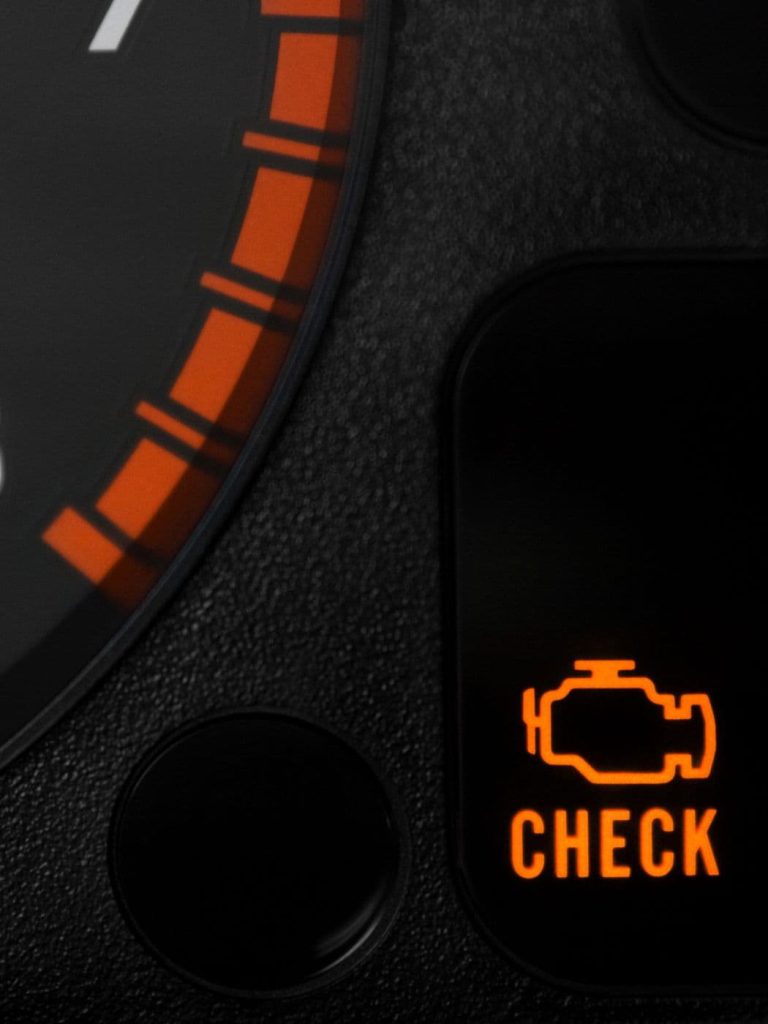
If you’re like most people, your heart sinks when your check engine light comes on. This ominous warning can mean something as simple as a loose gas cap, or as serious as a failed catalytic converter.

The check engine light is part of a vehicle’s onboard diagnostics system, or the OBD. The OBD monitors and regulates vehicle performance, and when it finds a problem that your engine’s computers can’t fix, a warning light comes on.

Here are the top five reasons :

Catalytic Converter Issues.
The catalytic converter reduces emissions from your vehicle’s exhaust, helping to reduce pollution. Its failure can make your engine stall, perform poorly, or not start at all. You also may fail an emissions test during your annual inspection.

Faulty Spark Plugs. Your spark plugs literally provide the spark that makes your engine go. When the spark plugs or the spark plug wires are faulty, you can end up with damage to your catalytic converter, ignition coils, or your oxygen sensor.

Timing Solenoid Failure. A variable valve timing solenoid is part of the timing system on your vehicle. As it goes bad, your engine’s performance and fuel efficiency will be markedly worse.

Evaporative System Leaks. The Evaporative Emission Control System (EVAP) captures gasoline fumes as they evaporate, and turns them back into usable fuel. The most common leak in this system is a loose gas cap. Other problems could be a leak in a hose, valve, or a even a leak in your fuel tank.

Fuel Mixture is Lean or Rich. To work at maximum efficiency, your vehicle needs a ratio of 14.7:1. That means that for every gram of fuel, there should be 14.7 grams of air. If there is too much fuel in the ratio, the engine is said to be running rich. On the other hand, an engine that is running lean has a mixture with too much air. Either of these will trigger the check engine light.

Here’s the most important part: If your light is on, it’s time to troubleshoot a bit. First, tighten your gas cap. Second, look at your gauges to see if your engine is overheating or you have low oil pressure. If either of these are true, you need to stop as soon as it’s safe and have your car towed to us.

If your check engine light is blinking, you need to pull over safely, and arrange to have your car brought to us. Especially in newer vehicles, driving a car with a blinking check engine light can lead to very costly repairs.

Whatever the reason for your check engine light being on, we can help diagnose the issue, and then repair it. Especially at the holiday season, we want you and your family to be safe, and for your vehicle to get you over the river and through the woods in time for pumpkin pie!

Here are the Top 5 Reasons Why a Check Engine Light is On Read More »

For Richer Or Leaner

An engine works when an air/fuel mixture is pulled into a cylinder, compressed, and then ignited. In order for an engine to run smoothly, the mixture of gasoline and air must be exactly 14.7:1. That means that for every gram of fuel, there should be 14.7 grams of air.

If there is too much fuel in the ratio, the engine is said to be running rich. On the other hand, an engine that is running lean has a mixture with too much air.

An engine that runs lean or rich isn’t efficient.

Engines that are running lean may have:

  • Clogged fuel injectors
  • Clogged fuel filter
  • Leaky fuel lines
  • Vacuum leak
  • Oxygen sensor problems
  • Falling fuel pump

Engines that are running rich may have faulty:

  • Mass Air Flow (MAF) Sensor
  • Manifold Absolute Pressure (MAP) Sensor
  • engine coolant temperature sensor
  • intake temperature sensor
  • fuel pressure regulator
  • injectors

Most of the time, your check engine light will alert you that you have an issue. If you have an OBD code reader, it will give you the code that will pinpoint the issue.

Of course you can also bring your vehicle into us, and we’ll help you diagnose the problem, and fix it for you. For richer or leaner – you can count on Norris!

For Richer Or Leaner Read More »

Topping The Tank? Stop Topping!

Are you one of those people who hate pumping gas? Do you try to squeeze as much gas into the tank as possible to make time between fill ups longer? Do you try to buy more gas today while the price is low? Does your OCD push you to spend up to a round number?

We know how you feel, but we have a warning for you. Topping off the tank is counter productive. When your car clicks, it is saying, “I’m full.”

Gasoline needs room to expand, and your tank is designed to have room for that expansion. Overfilling is bad for the environment, it wastes your gas money, and it’s really bad for your engine.

When you overfill, the gas overflows to the vapor canister, which is not designed for liquid gasoline. The raw fuel will damage the charcoal that traps the fuel vapors. Eventually the vent valve will also be damaged. If the onboard refueling vapor recovery (ORVR) system is damaged, your check engine will come on. Repairs can run into the hundreds of dollars.

So next time you hear the click of the gasoline pump, stop. Assure yourself that you’re saving money, air quality, and your engine.

Topping The Tank? Stop Topping! Read More »

Notation: Tire Rotation

If you’ve ever looked at the bottom of your shoes, you’ll see that some parts wear faster than others. The same uneven wearing happens to tires, and that worn tread isn’t good for your vehicle.

Here’s why.

  1. Stay Groovy. It helps your tires last longer. Front tires generally show wear faster than back tires. Heat, turning, braking, and running into the curb at the supermarket also cause uneven wear. When you rotate the tire, wear is distributed more evenly, and your tires will last longer.
  2. Don’t Get Suspended. Uneven tread wear can cause your car to vibrate as it moves, damaging your suspension system.
  3. Safety First. Rotating tires helps to keep more tread on the front tires for longer. More tread means more control as you drive.
  4. Comfort Plus. An even distribution of tread makes your ride a lot more smooth.
  5. Gas savings. When your tires have uneven wear, there is more friction as you drive, which means your engine has to work harder – using more gasoline. Save at the pump by rotating those tires!

Rotating your tires is one of those tasks that need to be done often. Usually, the manufacturers recommend that you rotate them every 5000 to 8000 miles. We rotate tires routinely at Norris. We often are asked to do it during oil changes, tuneups, or other repairs. Make a notation about rotation, and next time you’re in, ask us about it!

Notation: Tire Rotation Read More »

Scroll to Top