Snow Mobile: How to Drive in Frozen Weather

Since we don’t get a lot of winter weather here in Alamance County, we don’t get much practice driving on ice and in snow. Before you go slip sliding away in the storm, memorize these tips on staying mobile when the roads are frozen:

  1. Drive Smoothly. Drive like you have a full cup of really hot chocolate in your lap. In order to not get scalded, you have to drive very slowly and smoothly, with no fast turns, stops, or accelerations.
  2. Stop Earlier Than Usual. In driver’s ed you were taught to double the stopping distance if the road is wet. If you’re driving in snow, you need to triple the distance. If there is ice, stop four times earlier than you ordinarily would. Brake SLOWWWLY. You should also be alert for other cars that might not stop in time, especially oncoming cars or those at crossroads. Being t-boned in the ice is a chilling prospect!
  3. Heed the Dash Warning. If you have a newer car, you’ll have a stability control system warning in your dashboard. It’s a car with squiggly lines behind it. If this is lit in your car, your car has lost traction! Ease up on the accelerator until your vehicle regains its grip.
  4. Steer into a Skid. If you go into a skid, turn your wheel in the direction you are sliding until you feel that you have traction again. If your back wheels are sliding to the right, for example, turn your wheel to the right. Then, slowly turn back in the direction you want to go. Pro tip: Look where you want to go.

Whether you’re rooting for snow, or hoping that the Arctic weather stays where it belongs, the truth is that there may be a time that you will need to drive on the ice. Keep these tips in mind so that your and your vehicle will stay safe – and mobile – no matter what!

Snow Mobile: How to Drive in Frozen Weather Read More »

Hear That? Car Noises to Worry About

Many of us are able to identify which vehicle is driving up in our driveway, just by the sound. If there is something that sounds different, it often means your car is telling you that have a problem Learn about the car noises that are urgent cries for help.

Screech! When you hear a loud squeal or screech coming from the engine itself, it is probably a belt. The serpentine belt is what makes all your car’s major systems work. When it squeals, it could be about to break, and if it does, you’ll be stranded.
What Your Car is Saying: Bring your car to us as soon as possible.

Rattle. If you hear a loud rattle from under your car, it could mean you have an issue with your exhaust system. There could be a system misalignment, a loose or damaged bracket, or something touching the exhaust pipe.
What Your Car is Saying: Schedule a visit so we can get this fixed.

Grrrrng. It’s no surprise that the metallic grinding sound when you brake is an issue with your brakes. It’s usually your brake pads, which means that your car won’t stop properly. The best course of action is to have your brakes checked regularly when you come in for a tune up with us.
What Your Car is Saying: Take your car to Norris as soon as possible.

Tickticktick! Thankfully, that ticking noise you hear when you’re stopped is not a bomb, but it could signal impending doom. The problem could be one of many – like low oil, issues with pistons or valves, or rods knocking.
What Your Car is Saying: Schedule a visit so we can get this fixed.

Clunk! Your suspension system should somewhat even out bumps and pot holes, but if you hear a clunking noise, you need to get it checked out. It might be a loose nut or dried out bushing. It could be that you need to replace your shocks.
What Your Car is Saying: Schedule a visit so we can get this fixed.

Clack! If you hear a clicking noise while turning your front wheel drive vehicle, you probably have damaged or worn CV joints. Like your ankle is attached to your leg, CV joints are attached to the end of your axle shaft, giving it flexibility. If you hear this noise, you probably will need to replace the CV joints. If you don’t, one of them might break, leaving you stranded – often in the middle of an intersection.
What Your Car is Saying: Schedule a visit ASAP so we can get this fixed before it breaks.

Whatever noise you’re hearing, give us a call. We promise we’ll hear the phone ring and get you an appointment scheduled so that the only noise in your engine will be the hum of it working properly!

Image by Clker-Free-Vector-Images from Pixabay

Hear That? Car Noises to Worry About Read More »

Starting Things Up Right with Your Battery

What do a television remote, a hearing aid, and your car have in common? They all need a battery! Your car’s engine, lights, radio, and computer system are all powered by a 12 volt lead acid battery. The electricity is produced by a chemical reaction between the lead and the acid.

Getting Things Started. You may be surprised to find that a battery really only starts your vehicle. When you turn on your car, the battery gives an initial jolt of electricity that fires up your engine. When your engine is on, the alternator makes all the electricity that your car needs. The alternator also keeps your battery charged…most of the time.

Hearing that Click. Most people recognize the ‘click’ sound that a dead battery makes. A battery goes dead for many reasons, including:

  • A drain from lights or other devices that don’t turn off when the engine does.
  • A poorly maintained or weak battery.
  • Loose or corroded battery connections.
  • Extreme temperatures.
  • If your battery is dead, you’ll need to recharge it with a battery charger, or by jump starting your car.

Keeping Things Going. Car batteries generally need to be replaced every 3-5 years, but in the meantime, they need to be maintained. The battery terminals need to be kept clean, and the connections tight. You need to make sure there isn’t a drain on your battery when the car is off. Your car should be driven regularly.

If you have questions about your battery, or if you want us to make sure that it is working as it should, give us a call, or drop by. We’ll check the voltage, check your connections, and look for other issues. From the battery to the exhaust system, our goal is to make sure your vehicle reliably and safely gets you where you are going.

Read How to Care for Your Car Battery.

Fun Fact: Your lead acid battery has six cells. When your battery is fully charged, each cell produces 2.1 volts. If you do the math, a 12 volt battery a misnomer – it really is a 12.6-volt battery!

Starting Things Up Right with Your Battery Read More »

How to Care for Your Battery

The modern 12 volt lead acid battery usually doesn’t require much maintenance, but that doesn’t mean that you should ignore it completely. Here are a few things that you can do to make your battery have a long life.

Drive your car! Your car’s alternator recharges your battery as you drive. If you don’t drive often, or don’t drive far enough, you won’t have enough recharging time to refill the battery.

Don’t use your battery when the car isn’t running. Don’t leave your lights on, including the interior and trunk lights. Don’t listen to music or let your kids watch videos in the back.

Try to keep your car from getting too hot in the summer. Park under a tree or in a parking garage to keep the direct rays of the sun off your car hood.

Ask us about other ways to help your battery. We might recommend other accessories that will reduce physical wear and tear.

With good care, most batteries will last for about four years. At some point, even the best maintained batteries will finally fail. Here are some common warning signs of a battery that is about to die.

  • Corrosion on the battery case or posts.
  • A slower start to the engine.
  • A sulfuric, rotten egg smell.
  • Cracks in the battery case.

If you think your battery is wearing out, drop by. We can help you determine if your battery simply needs maintenance or needs to be replaced.

Related Post: Starting Things Up Right With Your Battery

How to Care for Your Battery Read More »

Driving To Grandmother’s House?

Lots of us are headed to Grandmother’s house this holiday season. Because of the COVID-19 pandemic, even more of us than usual are choosing to drive instead of fly. If you’re among those who are planning a road trip, make sure that your vehicle is ready for the trek.

going to grandmas

Check the tires. First, make sure your tires aren’t worn down too much. A rule of thumb is to take a penny and insert it into the tread. If you can see the top of Abraham Lincoln’s head, you probably need to get new tires. You also need to check the tire pressure, and make sure it meets the manufacturer’s recommendation for this time of year.

Check the spare tire. Make sure you have a spare tire and jack! There are several different kinds of spare tires, and some are only designed to get you to the next repair station. Whichever type you have, now’s a good time to learn how to change a tire.

Check the Battery, Belts, and Hoses. Make sure the battery connection is tight and that there is no corrosion on it. Take a look at the belts and hoses and make sure you don’t see any obvious fraying or holes.

Check your Lights. Turn on the lights, and make sure the high beam and low beams are working. Have someone make sure that your brake lights come on when you press on the brake pedal. Finally, check that the turn signals are blinking properly.

Check the Fluids. Check your oil. See if you have the proper amount of antifreeze and brake fluid. Make sure you have enough windshield wiper fluid. And – fill up the car with gasoline, too!

Check the Brakes. If you hear a grating or squealing noise when you stop, then you need to have a professional get your car’s braking system in order.

Of course, if you would prefer, you can just bring your vehicle in to us and we’ll check everything for you. And this holiday season, our holiday gift to you (and Grandmother!) is that we’ll do the pre-travel check for free!*

Don’t let an issue with your car keep you from getting to Grandmother’s house in time for turkey and fixings. Drop by to see us, and we’ll make sure that your car will go over the river and through the woods safely and dependably.

*There is a charge for parts and fluids, and any labor other than our initial inspection.

Image by klimkin from Pixabay

Driving To Grandmother’s House? Read More »

Muffling Your Car’s Noise With…a Muffler

Your exhaust system has three parts. It starts with the exhaust manifold, which filters gases from the engine itself. The next part is the catalytic converter, which changes those toxic gases into nitrogen, oxygen, carbon dioxide, and water.

The last part of the exhaust system is the muffler. The pistons and valves in your engine are very loud. Like the name implies, a muffler is designed to muffle these noises. There are several types, but all of them are designed to cancel out the sound waves that are created by the engine by sending them through a series of chambers. After the muffler, the exhaust gases and much lower sounds exit the car through the tailpipe.

Mufflers usually last about six years. If you usually drive where there is a lot of salt on the road, over rough roads, or in an area that has a lot of speed bumps, your muffler may wear out faster. Unsurprisingly, the most obvious sign that your muffler has an issue is that your engine will sound louder. You may also smell exhaust fumes while waiting for a stop light. If this is the case, you need to get your muffler checked immediately, because your exhaust contains poisonous carbon monoxide.

When we give your car a check up, we’ll check your car from front to back, top to bottom, inside and out. That includes the muffler. Our goal is to keep your vehicle in the best condition so you will always be able to depend on it.

Muffling Your Car’s Noise With…a Muffler Read More »

Is Your Antifreeze Ready for a Freeze?

Your car needs to be cooled to the correct temperature 365 days per year. To do that, your car has a cooling system, which includes the water pump, radiator, the thermostat, and coolant, which is a mixture of antifreeze and water.

Antifreeze and coolant sound like they would do opposite things, but actually they work together. The antifreeze keeps the coolant from freezing during the cold weather when your car is turned off. The coolant keeps your engine cool while it is running – all year long.

You know that when your engine runs, the combustion and moving parts create heat. Coolant circulates through the engine and absorbs the heat, then goes back to the radiator. The liquid flows through the radiator, which cools it, and then sends it back into the engine.

As we mentioned, the coolant is a mixture of antifreeze and water. It’s mixed at a specific ratio, depending on the brand and type of antifreeze. When the ratio is not correct, the viscosity of your coolant won’t be correct, meaning that you’re putting your vehicle at risk of freezing when the temperatures drop.

Making sure your antifreeze viscosity is correct is one of the things you need to do to get your car or truck ready for colder weather. It’s one of the things we check during a tune up, too.

Give us a call today and schedule your car’s tune up. We’ll make sure your car is ready for anything the road – or the weather – sends your way.

Is Your Antifreeze Ready for a Freeze? Read More »

Inspecting Car Inspections in Alamance County

auto inspection

If you live in North Carolina, you have to get your vehicle inspected every year before you can renew your license plate.* A car inspection makes sure that your car is operating safely. In some counties, like Alamance, they must also have an On-Board Diagnostic Emissions inspection to help air quality.

So what happens during an inspection? When we inspect your vehicle, we’ll first drive it into our bay area onto a lift. One of our licensed mechanics will then check the lights, brakes, the steering, tires, horn, the rearview mirror, exhaust system and the windshield wipers. If you have tinted windows, we’ll measure them to make sure they aren’t any darker than 32%.

For the emissions test, we hook your car up to a computer that actually communicates with the DMV, sharing information about various systems on your vehicle. The data is automatically entered into the state vehicle registration database. If the inspections show no issues, you’ll then be able to renew your car tags and pay your property taxes with the DMV.

What happens if you fail an inspection? If your vehicle doesn’t pass inspection, you have 60 days to have the issue fixed and have the failed portion of the inspection redone. You may also qualify for a waiver that will exempt you from the emissions portion.

When it’s time to have your vehicle inspection, bring your car in to us. No appointment is necessary, and you can wait in our comfortable waiting area while we inspect your vehicle. You can also use our handy dropoff service, or arrange for us to come get your vehicle from your home or workplace. Our mechanics will perform the inspection, talk to you about the repairs, and get you back on the road in no time!

*If your vehicle is more than 35 years old, it is exempt.

Inspecting Car Inspections in Alamance County Read More »

Celebrate National Tune Up Day

It’s not exactly a federal holiday, but September 25 is National Tune-Up day. If your vehicle hasn’t had a tune up lately, we think you should celebrate the day by scheduling a tune up with us!

During a tune up, we will:

  • Check the ignition system, including your battery, ignitions coils, distributor, wiring, and spark plugs.
  • Replace your spark plugs as needed. Once the spark plugs wear out, your engine won’t fire properly to burn fuel efficiently, which can damage your catalytic converter.
  • Change the engine air filter, keeping dirt and other debris from getting into your engine.
  • Perform a fuel system cleaning to remove and fuel deposits that cause engine hesitation, loss of power, and poor fuel economy.
  • Assess your car’s overall health, assessing it for breaks, leaks, and other issues.

We’ll also perform seasonal checks – like checking your antifreeze to make sure it has enough viscosity to keep your radiator from freezing.

Give your car or truck the gift of a tune up – and you’ll find that you’re really giving yourself the gift of knowing that your vehicle will give you safe and efficient transportation – wherever you are going.

Celebrate National Tune Up Day Read More »

The Exhaust Manifold – Keeping the Air Clean

It’s not a secret that engines can create a lot of pollution. Modern vehicles, however, do a lot to keep emissions under control, helping to reduce what is released into the environment. To accomplish this, there’s a lot that goes on between the engine and your exhaust pipe.

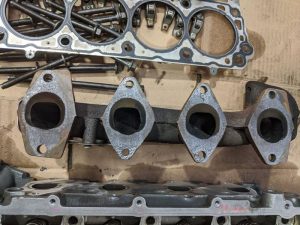
One of the first pieces of the system is the exhaust manifold. It’s attached right on the cylinder head, and its job is to direct exhaust gases from the engine’s cylinders to the next part of the exhaust system, the catalytic converter.

Manifold Problems. A leaky exhaust manifold can cause a lot of problems, especially if the leak is close to the engine. It can cause your oxygen sensor or the EGR valve to malfunction. It can upset the air/fuel balance. It can cause significant damage to your catalytic converter if the system detects that it is running lean.

You may also notice that your engine is making odd noises or you have a burning smell from the engine bay. Of course, one of the biggest indicators of a problem is your check engine light – or a failed inspection.

If you do have a leaky manifold, we’ll remove the old and replace it with new. It’s one of the ‘manifold’ things we do here at Norris Automotive.

The Exhaust Manifold – Keeping the Air Clean Read More »

Scroll to Top