
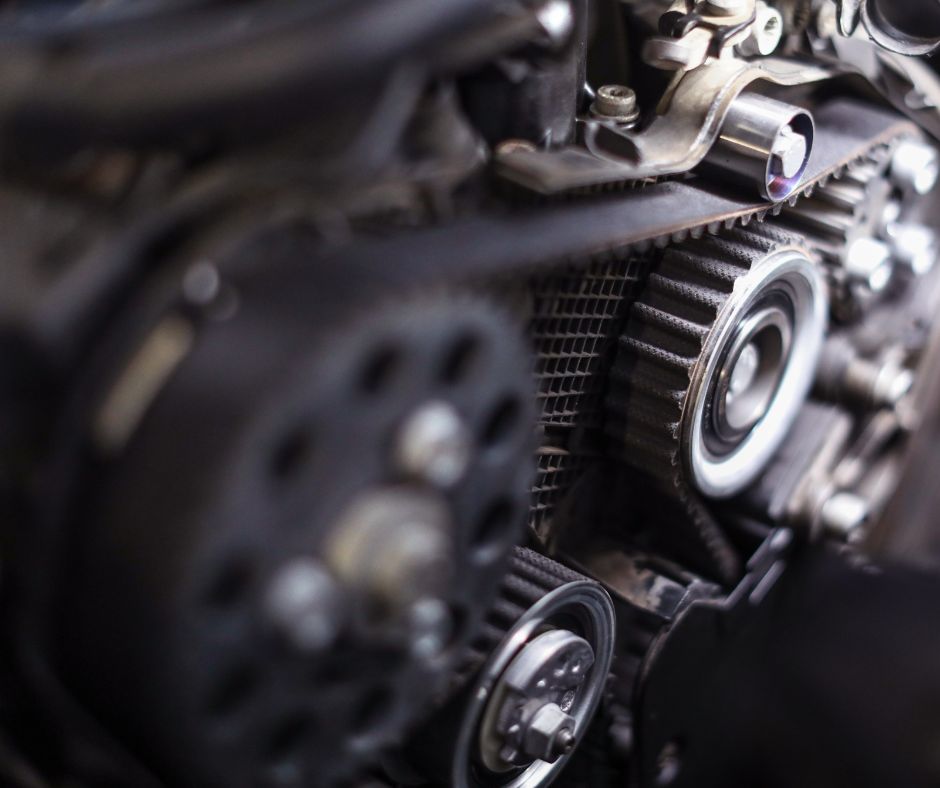
Have you ever started to speak in front of a group, and the words got stuck in your throat? Your engine knows how you feel! Engine hesitation is one of those issues that always seems to show up at the worst possible moment. You press the gas, expecting smooth acceleration, and instead you get a stammer, a pause, or a brief shudder. It’s unsettling, inconvenient, and often a sign that something under the hood needs attention.
Below are the most common reasons engines hesitate, and what they’re trying…to…tell…you.
Fuel Delivery Problems. Your engine depends on a steady, reliable flow of fuel. When that flow is disrupted, hesitation is often the first symptom. A clogged fuel filter, weakening fuel pump, or debris in the fuel system can all restrict fuel delivery. When the engine can’t get the fuel it needs, it falters. It’s like you trying to talk when you’re out…of…breath.
Ignition System Issues. The ignition system is responsible for lighting the air‑fuel mixture inside the engine. When components like spark plugs, ignition coils, or plug wires begin to fail, combustion becomes inconsistent. That inconsistency shows up as hesitation, misfires, or a general lack of power. Even a single worn spark plug can throw off the engine’s rhythm. If you’ve ever felt dizzy while trying to stand up, and had to…try…again, you’ll sympathize with your engine.
Airflow Disruptions. Engines require a precise balance of air and fuel. Anything that interferes with airflow can upset that balance. A dirty air filter, cracked intake hose, or vacuum leak can cause the engine to stumble as it tries to compensate. When the air entering the engine isn’t clean, steady, or properly measured, hesitation is often the result. It’s sort of like when your milkshake goes down…the…wrong…way.
Faulty Sensors. Modern vehicles rely heavily on sensors to monitor and adjust engine performance. When one of these sensors begins to fail, the engine computer receives inaccurate information. A malfunctioning oxygen sensor, mass airflow sensor, or throttle position sensor can cause hesitation as the computer struggles to make correct adjustments. In many cases, the engine is simply reacting to bad data. To put it bluntly, your engine is having a…brain…fart.
So What’s Causing Your Engine to Hesitate? . Pinpointing the exact cause requires proper diagnostics. Some issues are simple. It could be you need to replace a worn spark plug. Others involve deeper investigation. At Norris Automotive, our technicians use professional diagnostic tools to identify the source of the hesitation and restore smooth, reliable performance.
Preventing Hesitation Before It Starts. Routine maintenance is one of the best ways to avoid hesitation altogether. Fresh filters, timely tune‑ups, and scheduled inspections help keep fuel, air, and ignition systems working the way they should. Small services done regularly can prevent the larger, more expensive problems that lead to hesitation.
If your engine is stumbling, stuttering, stammering, hesitating, or just not feeling as responsive as it should, don’t hesitate! Bring it to Norris Automotive. We’ll track down the cause and get your vehicle running confidently again.