
At Norris Automotive, we see all kinds of vehicles come through our bays. Some are for routine maintenance, others for unexpected breakdowns. One recent repair reminded us why regular checkups matter, even if it’s an ‘extra’ car.
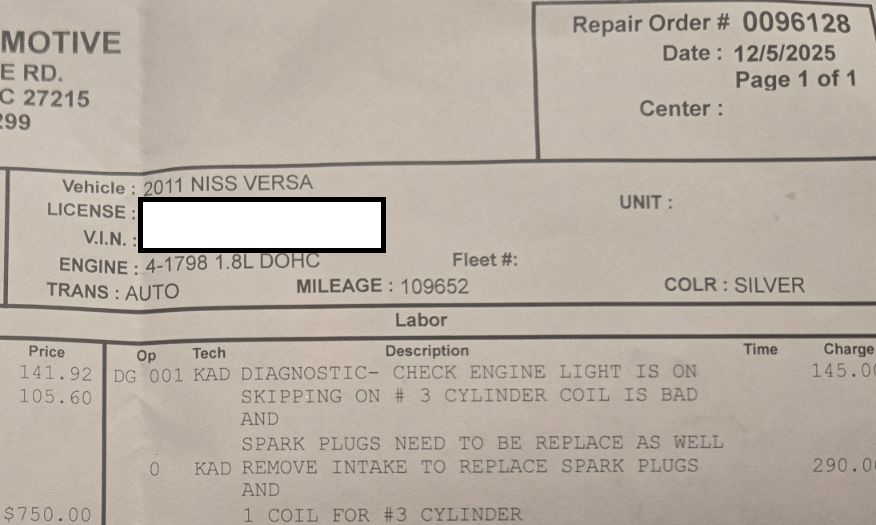
A family brought in their 2011 Nissan Versa, an “extra” car they’d picked up for their teenager. It had just crossed 106,000 miles. The check engine light had come on, and the car was driving rough…jerking, hesitating, and clearly misfiring. They’d already scanned the codes with an OBD reader and saw a failure in cylinder #3.
They did the right thing: they brought it to a shop they trust – you know – US. We ran a full diagnostic and confirmed the issue. It was a failed ignition coil on cylinder #3. But that wasn’t the whole story.
To access the coil and spark plugs, we had to remove part of the intake manifold. It’s not uncommon on compact engines, but it adds labor. Once inside, we saw the spark plugs were overdue for replacement. That’s likely what caused the coil to fail in the first place.
The repair was necessary, and the car is now running smoothly. But the cost of labor and parts, plus the environmental supply fees and tax, could have been avoided.
Why Spark Plugs Matter More Than You Think. Spark plugs are small, inexpensive parts—but they play a critical role in engine performance. When they wear out, they increase resistance in the ignition system. That forces the coil to work harder, and eventually, it burns out. Most manufacturers recommend replacing spark plugs around 100,000 miles. This Versa had just passed that mark. If the plugs had been changed proactively, the coil failure might never have happened.
A Piece of Advice. We’re always here to help when something goes wrong. But we’d rather help you avoid the problem in the first place. Preventive maintenance isn’t just good practice; it’s good economics.
If your vehicle is approaching a major mileage milestone, give us a call at Norris. We’ll help you stay ahead of the curve, saving you money and keeping you and your family safe.